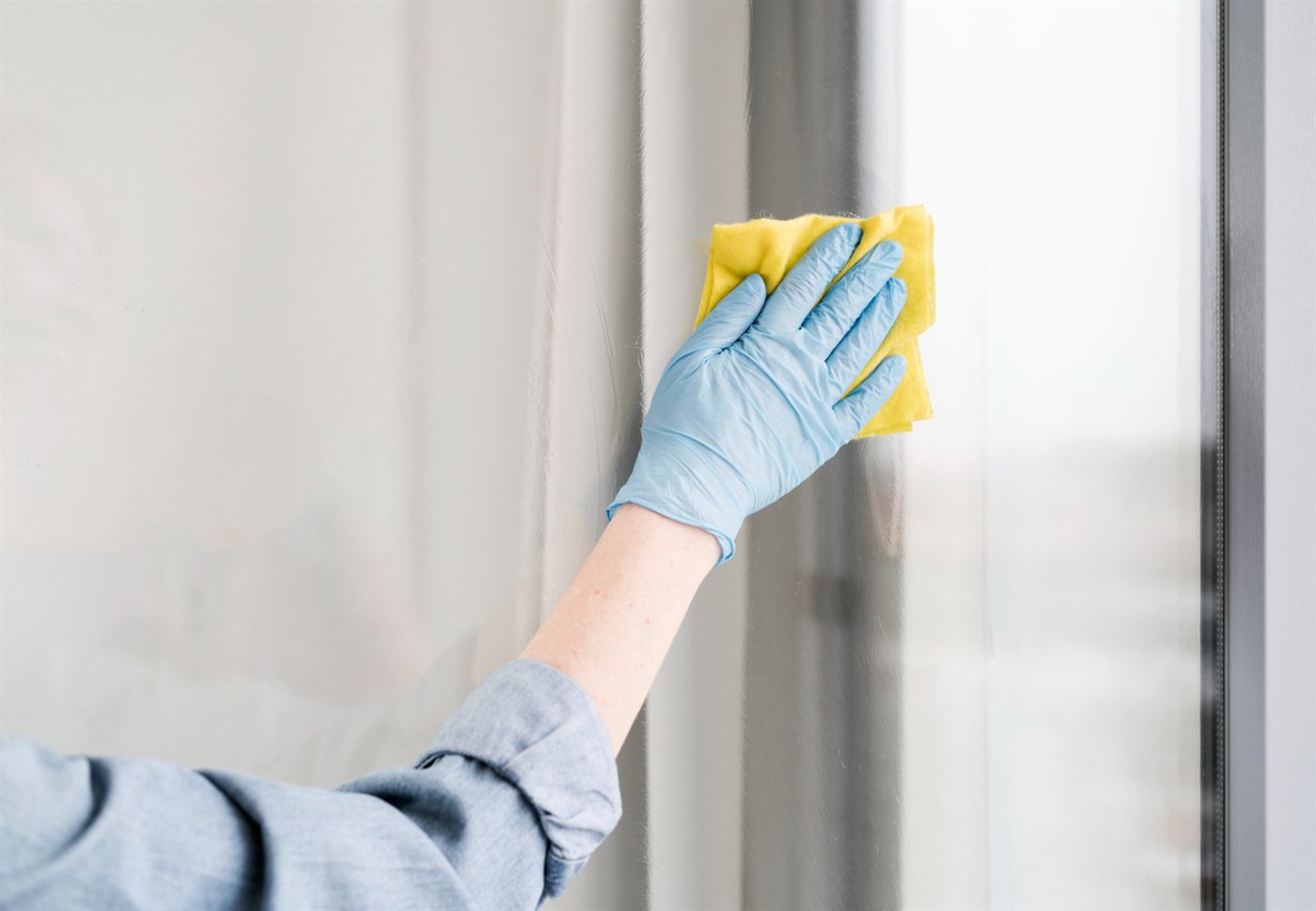
Check the material as well as the product name. A room contains several different finishes, and permission to use a spray on one of them does not automatically cover everything nearby.
Identify what you are treating
A table may have a coated top, metal legs and a different material around its edge. Record the part you actually intend to clean. Where the finish is unknown, consult the item’s care information or ask its supplier before choosing a treatment.
Read both sets of instructions
Compare the item’s care guidance with the spray’s stated uses. A conflict is a reason to pause and ask for advice. Do not treat a broad online phrase such as “household use” as permission for a delicate finish.
Understand the limit of a small-area check
Where the instructions call for a hidden-area test, follow them. Such a check concerns compatibility and appearance; it does not establish antimicrobial performance or make an otherwise unsuitable use acceptable. Keep those questions separate.
Make a simple material list
Mark each proposed use as confirmed, unresolved or excluded, and keep the reference that supports it. Our product guide to household disinfectant sprays explains how this list helps narrow your purchase.
Frequently asked questions
Does suitability for a room cover every object in it?
No. Check the actual material and finish of each item you intend to treat.
Does a hidden-area test prove a spray disinfects effectively?
No. It can help assess a finish where the instructions allow it, but it does not establish efficacy.
What if the furniture care guide conflicts with the spray directions?
Leave that use unresolved and seek clarification from the relevant manufacturer instead of choosing whichever instruction is more convenient.